The government has published its Railway Bill – what’s proposed, and what needs to be addressed? Paul Cooper reports
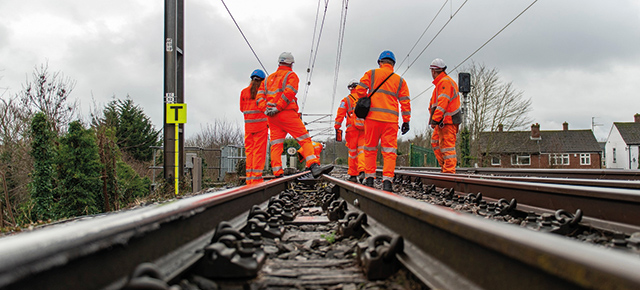 CILT (UK)supports the creation of GBR and the goal of a more integrated network that brings track and train operations under unified leadership
The Chartered Institute of Logistics and Transport has closely monitored rail reform and continues to offer independent advice on the evolving proposals. The institute supports the creation of Great British Railways and the goal of a more integrated, customer-focused network that brings track and train operations under unified leadership. However, success will depend on clear accountability, decisive leadership, and strong collaboration across the industry. The reformed system must be resilient yet adaptable, designed to endure for decades while accommodating future change. Legislation should focus less on rigid structures and more on what it enables, ensuring flexibility rather than constraint.
A long time coming
Rail reform has been many years in the making. The process began in 2018, when Keith Williams was tasked with conducting a comprehensive review of the UK’s railways. His report, published in 2021, gained broad support, but a Parliamentary Bill only appeared in early 2024 – shortly before the general election.
The current government has pledged to bring rail services back into public ownership, a move backed by two-thirds of the public. The Passenger Railway Services (Public Ownership) Act 2024 enables all remaining franchised passenger operators to transfer to the government-owned DfT Operator Limited (DFTO) as their current contracts expire. This transition is expected to conclude by the end of 2027. In February 2025, the government launched a consultation on proposals to reduce fragmentation and create a simpler, more coherent railway through GBR.
Twenty questions
The consultation posed 20 key questions to guide the legislative framework. It attracted over 2,300 responses, including from CILT (UK). Overall, 64% of respondents supported the proposals, 13% opposed them, and 23% offered alternative views or withheld judgment.
The resulting Railways Bill 2025, presented in 18 detailed documents, provides much-needed clarity but also leaves areas of uncertainty – particularly around track access charges and funding mechanisms. Encouragingly, the proposals now include pragmatic provisions for devolved governments, freight representation, accessibility, and a more flexible approach to the Periodic Review funding process.
Not a Return to British Rail
GBR will not resurrect British Rail. Instead, it will merge Network Rail, the 14 DFTO train operating companies, the Rail Delivery Group, and parts of the Department for Transport into one organisation. However, passenger services operated by devolved governments – such as ScotRail, Transport for Wales, the Elizabeth Line, London Overground, and Merseyrail – will remain outside GBR, as will freight and open-access operators. As a result, around 30% of all train services will continue to operate independently, maintaining a level of complexity that the creation of GBR cannot entirely remove.
GBR will be organised into roughly a dozen regional operating units that integrate track and train functions. Proposals now include arrangements for dedicated GBR units in Scotland and Wales and Borders, supported by Memoranda of Understanding between the respective governments – a welcome step that aligns with concerns raised by CILT (UK).
Rail reform offers a once-in-a-generation opportunity to build a truly integrated, efficient, and customer-focused railway
Nonetheless, further clarity is needed on how devolved and metropolitan authorities will interact with GBR, especially in London and the city regions. Freight representation on the GBR Board is a positive move and extending this to include funders and operators would enhance transparency and accountability.
Follow the money
A successful, sustainable railway requires stable long-term funding. The proposed
Long-Term Rail Strategy will be critical in setting out rail’s wider role in achieving sustainability and Net Zero objectives.
However, the government proposes only minor adjustments to funding mechanisms. Infrastructure spending will continue through the five-year Periodic Review process,
while subsidy payments and enhancement budgets remain determined by government spending reviews. Keeping these streams separate may undermine opportunities for efficiency and coherence.
Allowing flexibility in future funding reviews is sensible, but the current structure risks short-termism and underinvestment. A more integrated, multi-year funding model – perhaps on a three-year cycle – could improve certainty and efficiency.
GBR will be incentivised to reduce costs, but the division between cost types risks unintended distortions. For example, GBR could be tempted to adjust track access charges to favour its own services over independent operators. While freight and devolved transport plans are now formally recognised, this area still requires close scrutiny.
Fare reform is another positive development. Replacing outdated fare regulations with government-defined parameters offers the chance to modernise and simplify ticketing while retaining essential protections for passengers.
Freight: The unsung engine
Rail freight is vital to the UK economy – reducing congestion, cutting emissions,
and strengthening supply chains. Yet the current reform proposals lack detail
on how freight will be embedded in GBR’s structure. A comprehensive freight strategy is needed to ensure non-passenger services are fully supported and that growth targets are clearly defined and monitored.
Managing the transition
Transitioning to GBR will be complex and must be handled carefully to avoid disruption and safety risks. Previous reorganisations – such as British Rail’s restructuring and the 1990s privatisation – took several years. Maintaining momentum, leadership, and workforce stability will be essential.
The industry must also guard against losing innovation or commercial initiative during the transition. Addressing skills shortages in areas such as digital signalling, decarbonisation, and engineering will require sustained investment in training and professional development.
Recommendations
CILT (UK) recommends that government and GBR should ensure:
- Transparent performance frameworks with published KPIs on reliability, efficiency, and customer satisfaction.
- Statutory advisory roles for regional, local, and freight partners.
- Open data and ticketing platforms to enable third-party innovation and customer choice.
- Freight, sustainability, and resilience targets embedded in GBR’s statutory duties.
- Professional standards and workforce development integrated into organisational design.
- Ongoing consultation with industry stakeholders throughout the transition period.
Final thoughts
Rail reform offers a once-in-a-generation opportunity to build a truly integrated, efficient, and customer-focused railway. Success will depend on leadership, collaboration, and the courage to make the system not just simpler – but smarter, fairer, and future-ready.
ABOUT THE AUTHOR: Paul Cooper has 40 years’ experience across a range of train operating companies, owning groups, and rail industry bodies across Britain. He is a Fellow of the Chartered Institute of Logistics and Transport UK and is a member of its Strategic Rail Policy Group.
This story appears inside the latest issue of Passenger Transport.
DON’T MISS OUT – GET YOUR COPY! – click here to subscribe!