Change is coming. We are asking bus operators to help us build a network that sets a new standard for public transport in the UK, says Matt Goggins
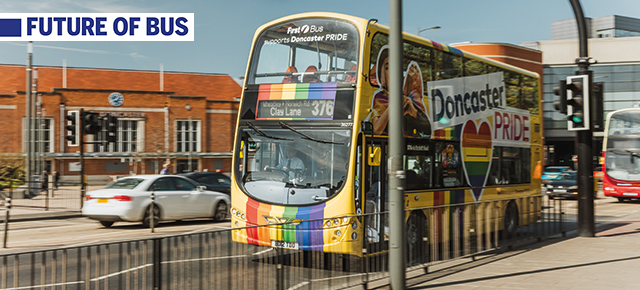 Currently private bus operators determine routes, frequencies and fares, often with limited coordination and minimal public accountability
In March this year the mayor of South Yorkshire, Oliver Coppard, made one of the most significant decisions in the region’s recent transport history: to bring buses back under public control.
It was a decision grounded in evidence, shaped by one of the largest public consultations of its kind in the UK, and driven by a clear mandate from our communities. Over 7,800 people took part and nearly 90% told us they wanted change.
They wanted a bus system that works better for them. They asked for reliability, affordability, accessibility and accountability. And they wanted a network that connects people to opportunity.
We listened. And we are now progressing plans to make this happen. From September 5, 2027, the first franchised buses will begin operating in Doncaster and parts of Sheffield. By July 2029, the transition will be complete across Barnsley, Doncaster, Rotherham and Sheffield. This marks the start of a new era. One where we take strategic control of our bus network and shape it around the needs of the people it serves.
This is more than a transport reform. It’s a social, economic and environmental intervention. It’s about putting the public back in public transport and building a system that delivers for everyone.
A turning point for bus reform
As Passenger Transport readers will know, for decades bus services in South Yorkshire – like much of the country – have operated under a deregulated model. Private operators have determined routes, frequencies and fares, often with limited coordination and minimal public accountability.
The long-term results are well-known: reduced service coverage, rising fares, declining reliability, and falling patronage. Buses remain the most used form of public transport in South Yorkshire, yet they’ve been the least strategically managed.
Franchising has the potential to change that. It gives us the tools to plan, coordinate and deliver services that meet public need, not just commercial viability. It allows us to integrate buses with trams, rail and active travel, and to reinvest any surplus directly back into the network.
This is about designing a system that works as a whole.
The Bus Services Bill
Our decision to franchise comes at a pivotal moment nationally. The government’s Bus Services Bill has fundamentally reshaped the franchising landscape. It allows direct award of initial contracts to incumbent operators, smoothing the transition. And it repeals the ban on municipal bus companies, giving authorities the option to run services directly if needed. Crucially, it introduces stronger protections for socially necessary services, mandates improved accessibility and driver training, and supports the transition to zero-emission fleets. In short, it gives local transport authorities the flexibility, authority and clarity needed to deliver better bus services, tailored to local priorities.
A collaborative approach
Franchising isn’t about sidelining operators. It’s about working in partnership.
We know that delivering a high quality network requires collaboration across the sector. That’s why we hosted a Pre-Market Engagement Day on November 12 in Sheffield, inviting operators from across the country and overseas to engage with our plans, meet our team, and explore how they can be part of South Yorkshire’s future.
We know there are risks, but we believe the biggest risk is not doing anything
Our franchising model is designed to support both large and small operators. It will include major ‘anchor’ contracts based around existing depots, alongside smaller packages aimed at SMEs and community transport providers.
We want operators who share our values – who prioritise quality, accessibility and sustainability – to help us deliver a network that’s reliable, inclusive and customer-centric.
Public engagement
Our journey doesn’t end with the decision to franchise. In fact, it’s just beginning.
This autumn, we’ve launched a new round of public and stakeholder engagement with a series of surveys and conversations designed to shape the future of our bus network.
We’re asking:
- What makes a bus journey feel safe, comfortable and accessible?
- What would persuade non-users to consider taking the bus, for work, leisure or everyday travel?
- What do people need from their local bus service?
Accessibility is a core focus. We want a network that works for everyone, including disabled passengers, older people, families, and those who’ve never considered using the bus before.
That means thinking about everything from vehicle design and driver training to real-time information and integrated ticketing. It means tackling barriers – physical, financial and psychological – and ensuring our services reflect the diversity of our communities.
Infrastructure and identity
Franchising is a long-term commitment. It requires investment, planning and resilience.
We’ve already earmarked £350m from South Yorkshire’s Transport for City Regions Fund (2027–2032) to support fleet renewal, depot acquisition and system integration. An additional £5m is being used this year to fund early implementation steps, including procurement, branding and operational readiness.
We’re also exploring a new unified identity for our transport system, bringing buses, trams and other assets under a single, recognisable brand that reflects our ambition and pride.
We know there are risks, but we believe the biggest risk is not doing anything. We’ll need to keep renewing our fleet and that will require further funding. But we’re confident that a successful and sustainable bus system will generate the revenues required to allow us to keep investing into the future, and that the long-term benefits will far outweigh the challenges.
A shared mission for the sector
To colleagues across the transport sector: franchising is a chance to rethink how we do things. It’s an opportunity to build networks that are resilient, responsive and rooted in the places they serve. It’s a chance to prioritise public value in service design, and develop a system that deliver for passengers.
To operators: we want to work with you. Bring your expertise, your ideas, and your commitment to quality. Help us build a network that sets a new standard for public transport in the UK. And to the people of South Yorkshire my message is: this is your bus system. Help us shape it. Take part in our surveys. Share your experiences. Tell us what works and what doesn’t.
Because when those first franchised buses roll out in 2027, it won’t just be the start of a new service. It will be the start of a new journey. One where we decide, together, what public transport should look like.
ABOUT THE AUTHOR: Matt Goggins is director of bus franchising at South Yorkshire Mayoral Combined Authority (SYMCA).
This story appears inside the latest issue of Passenger Transport.
DON’T MISS OUT – GET YOUR COPY! – click here to subscribe!