The options for buses are far more nuanced than a binary choice between franchising and partnership. CPT is offering guidance, says Nicholas Jessup
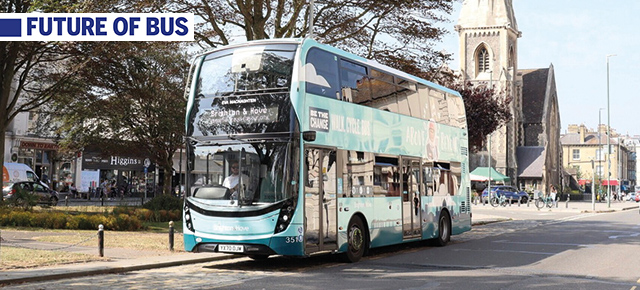 Brighton is among the places where you will see busy, regular, comprehensive bus services
Mayors and local authorities across England are facing their biggest decision on local transport for a generation. Who should be in the driving seat when it comes to buses?
Local authorities have been given new powers enabling them to regulate. But the route forward will differ from place to place. There are several key questions to ponder – is their current Enhanced Partnership delivering effectively? Is franchising the right decision locally?
The Bus Services Act has just received Royal Assent. It gives local areas a choice about the regulatory model they select for local bus networks. And it’s a seismic change – arguably the biggest shift for the industry since the 1985 Transport Act which invited the commercial sector into the market.
According to Heidi Alexander, the transport secretary, this legislation will “put buses back at the heart of communities” by enabling local authorities to change the way buses are regulated.
In many parts of the country, bus operators will rightly argue that buses are already at the heart of communities. Take a look at, say, Brighton, Nottingham, Portsmouth or Leicester and you will see busy, regular, comprehensive bus services, operating on a commercial basis in partnership with local authorities, getting strong reviews from customers. EPs in these areas have effectively strengthened the working relationship between authorities and bus operators, and delivered improved services for passengers.
But it would be foolish to claim that the status quo is working everywhere – austerity, traffic congestion and the pandemic have all put a strain on the national bus network, and left gaps which have prompted calls for change.
Political pressure for a fresh look at bus services has been brewing for quite some time. And it’s a complicated picture. There are many competing pressures, all within an environment of tight public funding.
Politicians have a tendency to portray the dilemma facing mayors as a binary choice between a franchised model or an Enhanced Partnership – on the one hand, full control in public hands, or on the other, much broader commercial freedom with key decisions in the hands of bus operators.
It is important to emphasise that the choice is much more nuanced than this. The Bus Services Act provides a great deal of leeway in determining the balance of responsibility, cost and risk between local authorities and bus companies. There are different shades of franchising, and different hues of Enhanced Partnership. Under the new regime, England’s 79 local transport authorities can design a bespoke model best suited to meet local needs.
That’s because there is no one answer on how best to manage local transport. The model chosen by Andy Burnham in Greater Manchester, for example, might not be the right fit for, say, Rutland – which has a population a 50th of the size.
The decision is in the hands of elected politicians. So what can we, as the bus industry, do to be constructive in helping local authorities navigate this new regulatory era?
A toolkit for local authorities
The Confederation of Passenger Transport (CPT) is this month launching a handbook, and a toolkit, to help local authorities make an informed, evidence-based and transparent decision on the best model for overseeing buses in their particular area.
There is no one answer on how best to manage local transport
The toolkit developed independently by Frontier Economics, uses multi-criteria decision analysis (MCDA) to weigh up the pros and cons of the different regulatory models, and to score the various models based on how well they deliver against key critical success factors. Endorsed by the Department for Transport, ATCO and ADEPT, it is a neutral, objective way to support good decision-making, free of ideological constraints.
Launching its resources for local authorities, CPT has chosen the slogan “more than one route” to emphasise the latitude available. And we’ve outlined a step-by-step process to choose a path.
The first step in the ladder for a local authority is to articulate a vision for bus services, and to define the desired outcome, as many local transport authorities. have already done through their BSIP (Bus Service Improvement Plan). We know, from Transport Focus research, that passengers’ top priorities tend to be punctuality and journey times. But what do people truly need locally? How can the accessibility needs of disabled passengers be factored in? To what extent is the goal to tempt motorists to switch to the bus? And how does local transport play into the local authority’s goals in addressing climate change?
Having settled on this overarching vision, a second step is to make the case for improvement by assessing the existing model and considering whether, and how, it falls short.
At the third step, a shortlist can be drawn up of models to compare with the status quo. There are a number of measures to consider – including:
- Strategic fit. The extent to which each model fits the vision for bus services outlined by the local authority, to satisfy passengers.
- Value for money. Whether each option secures value for taxpayers, offers a satisfactory split of risk and reward and incentivises private investment.
- Market capacity. Whether the operators are there to deliver what the model seeks to achieve, and whether the outcome will be a sustainable competitive market.
- Affordability. Minimising the short-term cost of change, and keeping longer term costs for infrastructure and procurement under control.
- Achievability. To what extent the local authority has the capacity to deliver change, minimising the potential for legal challenge and of a disruptive transition.
As a fourth step, all of these factors can be weighed up using MCDA – multi-criteria decision analysis – which allows local authorities to plug in evidence, to crunch the numbers and see what rational answer emerges in terms of a model for running buses. The CPT/Frontier Economics Excel toolkit provides a way to do this.
For all the sound and fury that may occasionally break out, we share the same objectives
Subsequent steps entail more in-depth analysis and stakeholder engagement to further refine and develop the favoured model. These steps will form the focus of upcoming DfT guidance.
What makes this such a vibrant debate is England’s diversity. Local authorities across the country are starkly different.
To help in decision-making, CPT’s handbook imagines four archetypical local authority areas: a medium sized urban area with surrounding periphery; a large urban conurbation; a largely rural area with dispersed urban centres; and a combined authority that includes multiple towns and cities with rural surrounds.
Each of these will have a different level of existing public transport – including light rail, metro and integration with national rail. They will have different demographics, different customer habits, and different levels of car ownership.
Layering onto this is the diversity of models available. Franchising, for example, could involve an entire area, just a part of it or even just a defined corridor or route. Critics of the franchising route point out that it is more administratively complicated, and could involve a local authority taking on considerable financial risk – including purchasing depots, as Transport for Greater Manchester has done, or owning bus fleets. And it can be difficult for small or medium-sized bus operators to navigate.
Meanwhile, Enhanced Partnerships are a broad category of arrangements under which local transport authorities and operators have set shared objectives, and decided upon a legal binding plan to meet them. The EP model can leverage the expertise of private operators, respond to passengers’ needs and deliver improvements nimbly. But good governance is important – to make sure all decisions are based on trust and commitment.
In some cases, local authorities will be looking at evolution of EPs – which, for example, could involve greater integration of fares or branding, while stopping short of direction from a central authority.
The magic ingredient is public money. Despite welcome long-term settlements for bus funding from central government, we are operating in a tight fiscal environment nationwide. So a mayor, or a council leader, may begin with a long wish-list but not every item can be ticked off with the resource available.
Nevertheless, it has become clear that we are entering a new era of diversity in the way buses are run nationwide. These are decisions that matter, and which will have an impact for the long term.
The final steps in the CPT’s model are to implement the local authority’s preferred model – and then to monitor carefully, and evaluate whether it is delivering the vision imagined at the start of the process. Because while these decisions are not easily reversed, they are always subject to amelioration, and to adjustment.
So what do we, as an industry, want? Every local bus company will have a local perspective. But as a broad principle, we want clarity – a clear roadmap from political decision-makers that will allow operators to plan investment.
Bus operators are nimble, flexible and accustomed to working within different regulatory regimes. Our role is to support local authorities with evidence and expertise in decision-making, and then to help make the chosen model a success.
It is exciting to recognise that buses are at the heart of the political agenda. And for all the sound and fury that may occasionally break out, we share the same objectives as local authorities – to deliver frequent, reliable, affordable buses.
The industry, led by CPT, has argued successfully that local authority control won’t guarantee success. That point has been accepted by the government in this legislation, which grants an unprecedented amount of local leeway in choosing a way forward. It is down to the bus industry to work in partnership with local authorities to make the next generation of bus travel a success.
ABOUT THE AUTHOR: Nicholas Jessup is policy manager at the Confederation of Passenger Transport.
This story appears inside the latest issue of Passenger Transport.
DON’T MISS OUT – GET YOUR COPY! – click here to subscribe!