Arriva London’s Philip Gerhardt has urged people to consider careers across transport, highlighting routes from driving and graduate schemes
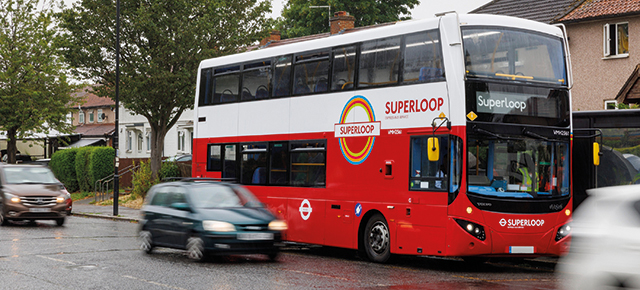 Superloop
The transport sector offers great opportunities for young people and those considering a change of career, according to Arriva London commercial director Philip Gerhardt.
Speaking on the Lunch with Leon podcast, which is produced in association with Passenger Transport. Gerhardt issued a “call to people to come and join transport”, arguing that the industry needs to rebuild its workforce pipeline following disruption during the pandemic.
“We’ve got a huge opportunity for people to come in and start at the bottom,” he said. “There was a bit of a break during the pandemic in terms of workforce, and we’re a few years behind because of that, so it’s time for people to come through and be ready to take on roles.”
He said the openings extended well beyond technology and systems, encompassing drivers, staff development and graduate pathways, with opportunities to progress into roles including operations manager, general manager, commercial director and managing director.
Gerhardt pointed to Arriva London’s managing director, Wasim Mohammed, who began as a bus driver, as an example of the progression available. He added: “There’s a bigger piece here … about how exciting transport is – it is, and there’s so much you can get out of it. So to anyone interested in the sector, just give it a go. It’s fantastic, you have so much fun – it’s better than sitting at a desk.”
Just give it a go. It’s fantastic, you have so much fun – it’s better than sitting at a desk
The appeal of transport, he added, was the ability to see and experience the results of the work directly. Speaking from Tottenham bus garage, Gerhardt said: “You can’t run a transport company from behind a desk.” He uses buses every day and argued that managers should get out to inspect the product passengers encounter, from vehicles and cleanliness to signage and information.
Podcast host Leon Daniels highlighted the expanding range of data-processing, artificial intelligence and data-analytics jobs in transport, alongside engineering and operational careers. The discussion illustrated how those skills are already being applied to London’s bus network.
Gerhardt said the CitySwift schedule optimisation platform introduced by Transport for London and operators in May 2025 had created a “single source of truth”, allowing both sides to assess the same performance data. Combined with an AI-assisted service control platform, it was helping them identify routes requiring reliability improvements and respond faster to changes in bus speeds and patronage.
The technology forms part of the industry’s response to softer ridership, changing travel patterns and rising costs. Gerhardt said operators faced the expense of the transition to electric vehicles and improved safety features while seeking to provide value for the public purse and remain profitable.
He also highlighted changing demand across the week, with the former gap between weekday and Saturday schedules now much narrower. Friday demand in particular more closely resembles Saturday, while some routes may need concentrated “super-peaks” rather than a traditional peak extending across much of the day.
Reliability remained a key driver of patronage, he said, with slow journeys increasing the risk of services being curtailed before passengers reach their destinations. Better scheduling, targeted road widening, bus priority and bus lanes were among the measures being pursued.
Passenger information offered another area for innovation. Gerhardt said digital channels could alert passengers quickly when their usual route was disrupted, but warned that improvements must not exclude people without smartphones. Printed timetables and roadside information therefore still had to be accurate, particularly for passengers whose access to essential journeys depended on an infrequent service. Certainty was especially important late at night and for vulnerable passengers, he added.
Gerhardt also backed Superloop, describing himself as a “massive” advocate after his TfL team helped establish the first routes. He agreed that its success represented not only the delivery of express services but a triumph of distinctive branding and “doing something different”.
LISTEN TO THE FULL INTERVIEW
leondaniels.co.uk/podcast
This article appears in the latest issue of Passenger Transport.
DON’T MISS OUT – GET YOUR COPY! – click here to subscribe!