Data guides franchising decisions, but local knowledge brings them to life, says CitySwift CEO and co-founder Brian O’Rourke
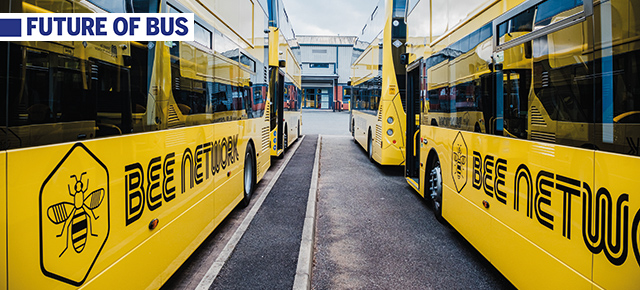 Greater Manchester was the first area in the UK to introduce bus franchising
Across the UK, the conversation around bus franchising has shifted from if to when. Greater Manchester has led the way, with other regions such as the North East and the West Midlands preparing for, or exploring, franchising their bus networks.
For many local authorities, franchising represents a chance to reset public transport: to rebuild trust, improve reliability, and design services around the needs of passengers. But franchising is not the magic solution to bus service performance. Success does not end with the first buses going on the road. That’s when the hard work begins.
To truly deliver on franchising’s promise, authorities and operators need two things: the accurate and trusted data, and the local expertise to interpret it.
The performance reality
Franchising aims to bring simplicity, equity and integration to the UK’s bus networks. It promises services that are reliable, affordable and designed around passenger demand. Yet delivering those outcomes is far from straightforward.
Passenger numbers in many areas remain below pre-pandemic levels. The £2/£3 fare cap in England has made public transport more affordable, but it has also squeezed margins. Congestion, driver shortages and rising operating costs continue to challenge performance.
Authorities and operators need a continuous view of how their networks are performing
Franchising provides a framework for accountability and coordination, but it does not guarantee operational success. To achieve that, authorities and operators need a continuous view of how their networks are performing, why they are performing that way, and what actions can make them better. This is where performance data becomes essential.
Why data matters
Bus franchising is not a single event. It’s a lifecycle, and each stage of that lifecycle demands a different kind of insight.
Before a single bus runs under a newly franchised network, authorities must decide how the network will look and feel. They must determine where services run, how often, and what resources are required. These are high-stakes decisions that depend on the quality of the data available to inform them.
Accurate performance and demand data reveal the true state of the network: where delays occur, which routes face volatility, and where passenger flows are shifting. Without this evidence, decisions risk being based on assumptions or outdated information. With the right data, authorities can design smarter service specifications, set realistic performance targets and identify cost-neutral opportunities for improvement.
But access to accurate data insights alone is not enough. Local knowledge adds the crucial context that numbers cannot capture. The impact of school traffic, seasonal congestion and community-specific travel patterns all require local understanding. The combination of hard data and lived experience produces networks that are both efficient and realistic.
Once the planning and tendering stages are complete, focus shifts to mobilisation. This is the point where expectations meet operational reality. Every authority and operator wants a smooth transition, but without access to timely performance data, small issues can become big problems. Schedules that looked achievable on paper may fail to reflect on-street conditions, and bottlenecks that were never modelled can cause persistent delays.
Historical operational data can bridge this gap. It helps planners validate runtimes, monitor reliability during the early phases, and make quick adjustments before the public loses confidence. Local operators and drivers add an additional layer of insight, translating data trends into on-the-ground improvements. The most successful transitions are built on collaboration between data specialists and local teams who understand their networks inside out.
After launch, performance monitoring should not stop at reporting. The best franchised networks treat data as an ongoing feedback loop rather than a compliance tool. Continuous data analysis helps identify where timetables have drifted from reality, where they need to be adjusted to service disruptions, where passenger demand is changing, and where small operational tweaks could enhance reliability. These incremental, evidence-based adjustments keep networks responsive and efficient.
Without this mindset, franchised services risk stagnating. When authorities rely solely on manual feedback or contractual reporting, problems are often spotted only after they affect passengers. By using data proactively, authorities can maintain transparency, control costs and protect service quality.
The risks of overlooking data
Failing to use performance data when planning a franchised bus network creates significant strategic and operational risks. Without the baseline insights it unlocks, authorities may unintentionally carry inefficiencies into the new network. Poor scheduling, excessive layover times and low performing routes can easily be replicated if the network is designed on assumptions rather than evidence. This not only undermines the purpose of franchising but also risks locking in existing weaknesses under a different governance structure.
The absence of performance data also makes it difficult to set realistic performance targets. Without clear benchmarks for punctuality, reliability and efficiency, it’s challenging to set attainable KPIs. Resource allocation becomes guesswork, with no visibility into where the network is over or under resourced.
Crucially, missing the opportunity to analyse performance also means missing early “quick wins.” Identifying the poorest performing stops, corridors or reliability bottlenecks before franchising enables targeted improvements to be made that build early public confidence. Without these insights, the new network risks being a reshuffle rather than a reform. And for passengers, little will change: journey times remain inconsistent, connections unreliable and the promised benefits of franchising go unrealised.
Local knowledge is everything
While data is fundamental, it cannot replace the local knowledge and expertise of the authorities and operators who know their networks inside out. Data explains what is happening and how often, but people on the ground understand why. No dataset captures the nuances that local transport teams encounter daily: the surge in traffic after school hours, the weekend influx caused by a football match, or the subtle shifts in passenger habits after a new housing development opens.
Failing to use performance data when planning a franchised bus network creates significant strategic and operational risks
The most effective franchising models combine data-led decision frameworks with the insight of experienced local professionals. This blend ensures that networks remain technically optimised yet contextually relevant.
At CitySwift, we see this balance in action across the UK. Data empowers teams to make confident, evidence-based choices, while local expertise ensures those choices make sense in practice. Technology should enhance human judgment, not replace it.
Creating a data-first culture
Embedding data throughout the franchising process, from pre-planning to in-life, requires more than tools or dashboards. It requires a shift in thinking.
Authorities and operators need to move from reporting to foresight, using data not only to measure outcomes but to anticipate and prevent issues. This enables them to move from contractual compliance to proactive collaboration, sharing insights openly to build trust and joint accountability. And they need to move from static network plans to living systems, where services evolve continuously based on real-world evidence.
The UK’s leading transport authorities are already taking this approach. They’re treating data as infrastructure in its own right, integrating datasets across departments and using analytics to guide decisions from policy design to passenger communication. Others must follow if franchising is to fulfil its potential.
The future of franchising
Franchising gives regions the power to design networks that reflect local priorities. Data provides the means to deliver those priorities with consistency and transparency.
The future of franchising will belong to regions that combine these two forces: data-led insight and local operational expertise. It is this partnership that turns franchising from a structural reform into a living, adaptive system that truly meets passenger needs.
Franchising gives regions the power to design networks that reflect local priorities
Franchising done well is not about control. It is about collaboration, shared goals and continuous improvement. When authorities and operators use data and local knowledge together, they can deliver networks that are not only efficient but deeply connected to the communities they serve.
Register for CitySwift’s upcoming webinar – ‘A framework for using data to drive franchising success’:
Join Kate Hamblin, CitySwift’s Head of Authorities, and Carl Ogden, Head of Franchised Operators, at 11am on November 27 to get practical strategies for embedding data-driven optimisation into your franchising journey. You can register for the webinar by visiting https://eu1.hubs.ly/H0pqwBB0
This story appears inside the latest issue of Passenger Transport.
DON’T MISS OUT – GET YOUR COPY! – click here to subscribe!