
Bus operators welcome Transport Committee’s recommendations to boost buses but challenge ‘outdated’ view that sector is trapped in spiral of decline
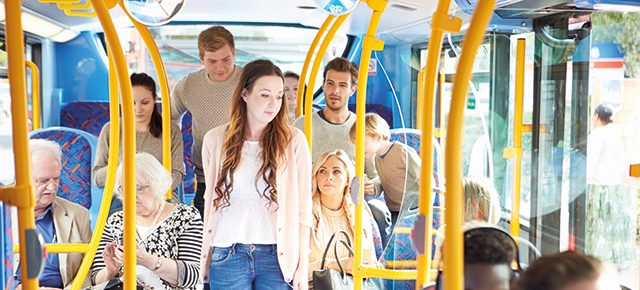 Bus use is increasing
Bus operators welcomed much the Transport Select Committee’s recommended bus reforms, but Graham Vidler, chief executive of the Confederation of Passenger Transport, said “perceptions of a ‘decade of decline’ in bus travel are outdated and far too gloomy”.
Unveiling its report, the committee said “more ambition needed to undo a decade of decline and get bums back on seats”. It pointed out that Department for Transport data shows that the number of bus journeys taken in England outside of London fell from 4.6 billion in 2009 to 3.6 billion in 2024, a reduction of 21.7%. It also cited the County Councils Network’s claim that, between 2019 and 2024, bus services decreased by 18% on average in areas covered by county and unitary councils.
Vidler painted a more positive picture, stating: “The number of bus journeys taken across Britain rose by 8% last year, including a 10% increase in bus travel across England outside London – the biggest rise for decades. The Covid-19 pandemic and local authority austerity harmed the bus network. But bus travel is staging a comeback, supported by the national fare cap and investment by bus companies in modern, environmentally friendly vehicles.
Vidler said bus operators would support a number of the committee’s recommendations, including the call for free bus travel to the piloted for under 22s.
“Promoting bus travel to under 22s will help to build a lifelong habit, shifting the common assumption that everybody needs to learn to drive at 17,” he said. “One option would be a £1 fare cap for young people, which would cost between £100m and £150m a year to implement across England.
They would also welcome the committee’s call for minimum bus service levels nationwide – although this can only be delivered through sustained, long-term funding for the industry.
Vidler said: “To make it work, the government needs to provide five year visibility on funding and should act to ensure transport spending is ringfenced for buses.”
However, to truly boost bus usage across the country, Vidler said politicians needed to commit to speeding up buses.
Bus travel is staging a comeback, supported by the national fare cap and investment by bus companies
“That means round-the-clock bus lanes, traffic light priority and better co-ordination of roadworks to take buses out of traffic and get passengers to their destinations quickly,” he said. “Faster journeys would create a virtuous circle of more passengers on board, more investment by bus companies, greater frequencies and less car traffic on the road.”
This point was also made by Lee White, who chairs the Bus and Coach Policy Group for the Chartered Institute of logistics and Transport UK. He said: “One of the key priorities must be to ensure buses have bus lanes to utilise and have the support of local councils. Buses will not be favourable if you are stuck in the same traffic as the car user – instead we must find pull factors to ensure the public see buses as a viable alternative to the car.”
Bus Users UK, the passenger champion, welcomed the report. Bus Users UK director for England, Lydia Horbury said: “This report is both a wake-up call and an opportunity. Buses are not just vehicles; they are lifelines connecting people to jobs, training, healthcare and each other. For too long, services have been reduced or cut back entirely, leaving communities stranded and young people locked out of opportunities.
Horbury added: “We fully support the call for a free bus pass for under-22s – it’s an investment in our future workforce, our economy and our environment. But it can only succeed if every community, urban or rural, has a reliable, affordable and accessible bus network.”
Responding to the report, Silviya Barrett of Campaign for Better Transport said: ““This report contains the ingredients for a rural bus renaissance that could truly change lives. Its recommendations, if adopted, would take us a large step closer to a society where people’s needs are met, opportunities are unlocked and lives enriched.”
Meanwhile, RMT general secretary Eddie Dempsey said: “As the Transport Committee highlights, the government needs to come up with a coherent strategy to improve bus services and attract passengers.
“The solution is not to tinker around the edges but to end the failed legacy of deregulation and put our buses back where they belong in public hands.”
This article appears in the latest issue of Passenger Transport.
DON’T MISS OUT – GET YOUR COPY! – click here to subscribe!



